
Menopause: What you need to know
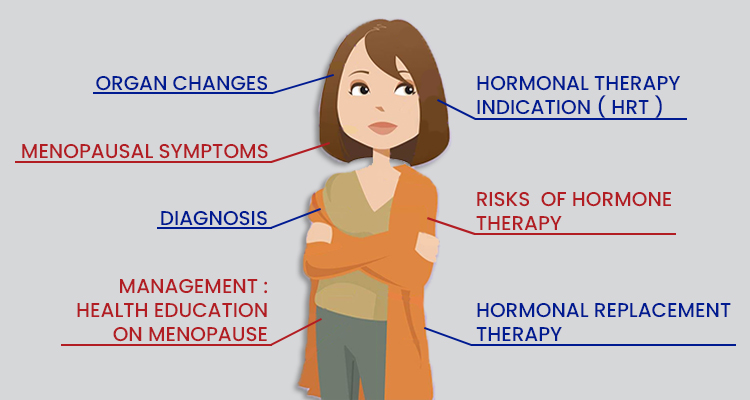
In today’s times, because of improvement in healthcare, women spend one third of their lives in the postmenopausal period. Menopause and postmenopausal ph ase pose various problems and issues in a woman’s life. All these are discussed in detail in this blog.
The word “menopause” literally means the “end of monthly cycles” and is derived from the Greek word pausis (cessation) and the root men (month). It signifies a transition from reproductive to non-reproductive phase and is an unavoidable change that every woman will experience. Menopause is the permanent cessation of her menstrual cycles which is the primary function of the human ovaries. The age of menopause is genetically predetermined. It occurs early in thin women, in women who smoke cigarettes and in severe malnutrition. The age of menopause is 45-55 years. The average age of menopause is 50. In the reproductive period or before menopause, the ovaries in a woman have 2 functions – one of Reproduction and second is the release of the sex hormones like estrogen and progesterone in a steady balance.
In the premenopausal period, which can begin few years prior to menopause, the ovaries gradually produce less estrogen. The menstrual pattern prior to menopause could be irregular periods with or without excessive bleeding and because of the drop in estrogen women experience many symptoms. There is a remote possibility of a woman getting pregnant in this period. Menopausal phase marks the end of menstruation. Once a woman has gone through a period of 12 consecutive months without experiencing a menstrual cycle, she is said to be in the Post menopausal phase.
A woman becomes Menopausal in various ways:
- Natural Menopause There is a natural decline of the reproductive hormones.
- Premature or Early Menopause – A woman gets menopausal early than the normal age because of genetic causes, chemotherapy or radiation therapy.
- Surgical or Induced Menopause – Surgical removal of the uterus or both ovaries can be the reason of menopause. Since there is abrupt disruption of hormones after removal of both ovaries, the menopausal symptoms are more severe, more frequent and last longer when compared to natural menopause.
ORGAN CHANGES associated with menopause:
- Ovaries: Shrink in size, become wrinkled and white. There is thinning of the cortex with increase in medullary components. There are abundance of stromal cells which have secretory activity.
- Fallopian tubes: Show feature of atrophy. The muscle coat becomes thinner, the cilia disappear.
- The uterus: Becomes smaller and the ratio between the body and the cervix reverts to the 1:1 ratio. The endometrium becomes thin and atrophic. It is about 4 mms on Pelvic Ultrasonography . Cervical secretion becomes scanty.
- The vagina: becomes narrower due to gradual loss of elasticity. The vaginal epithelium becomes thin. The rugae gradually flatten. The vaginal pH becomes alkaline.
- The vulva: Shows feature of atrophy. The labia become flattened and the pubic hair becomes scantier.
- Breast fat: Is reabsorbed and the glands atrophy. The nipples decrease in size. Ultimately, the breasts become flat and pendulous.
- Bladder and urethra: the epithelium becomes thin and makes the woman more prone to get infection. Loss of muscle tone leads to pelvic relaxation, uterine descend and anatomic changes in the urethra and neck of bladder.
- Skeletal system and bone: loss of bone mass by 3 to 5 % per year due to deficiency of estrogen leading to osteoporosis.
- Cardiovascular system: deficiency of estrogen increases the risk of cardiovascular disease because of its function of decreasing HDL cholesterol and antioxidant property.
MENOPAUSAL SYMPTOMS:
- VASOMOTOR SYMPTOMS
- Hot flashes , Night sweats and Sleep disturbance
- GENITOURINARY SYMPTOMS Atrophic changes , epithelium more prone to damage and infection , Vaginal pH become alkaline and narrow introitus, Incontinence of urine , Urgency and Dysuria
- PSYCHOLOGICAL SYMPTOM – Irritability , Mood swings , Poor memory , Anxiety , Headache , Depression and Dysphasia
- SKIN AND HAIR SYMPTOMS – Purse string , Crow feet , Loss of skin elasticity gradually , Loss of pubic and axillary hair and Slight baldness
- SEXUAL DYSFUNCTION Sexual desire decreases . The vagina becomes dry and intercourse could be painful
- DEMENTIA AND COGNITIVE DECLINE
DIAGNOSIS – Cessation of menstrual cycle for consecutive 12 month during climacteric period:-
- Average age of menopause 50 years
- Appearance of menopausal symptoms
- Vaginal cytology
- Serum estradiol <20 pg/ml
- Serum FSH and LH > 40 mIU/mL
MANAGEMENT – HEALTH EDUCATION ON MENOPAUSE
Women at the menopausal stage need to be supported emotionally; they need counselling about how to manage menopause. This may also help them to overcome anxiety and depression. Certain life style modification is necessary to prevent the occurrence or minimize the effects of menopausal symptoms . Nutritious diet , Supplementary calcium , Exercise , Vitamin D , Cessation of smoking and alcohol , Bisphosphonate and Calcitonin are known to be of benefit . All family members and health practitioners should try, educate and motivate women to follow the following points.
- To reduce hot flushes and hot flashes : Work place should not be too warm, lower heat, use cotton clothes , Use the fan , Replace coffee, tea, cola beverages by natural juices , No smoking , Learn to relax , Exercise on a regular basis helps to reduce anxiety and take plenty of fluids.
- To reduce vaginal dryness: In sexual relations devote more time for fore play as this will increase vaginal lubrication naturally. Using specific lubricants that are sold in pharmacies, Vaseline or oil.
- To control urinary incontinence – Exercises to strengthen pelvic muscles: When the bladder is empty, try to cut the flow of urine for a few seconds (the muscles are contracted) and then relax. Perform this exercise several times a day.
- To prevent osteoporosis : Moderate and regular physical exercise where all the joints work and thus hinders the process of decalcification of bone. A diet rich in calcium by increasing the intake of dairy products is beneficial. Begin with small but regular walks and then gradually move over to weight bearing exercises which help to release endorphins from the brain that send feel good messages to the body. Resistance exercises help strengthen your bones and improve your balance. If you show early signs of bone loss or have a strong family history of osteoporosis, talk to your doctor about medications that can help stop further weakening.
- The promotion of social relationships (friends, women’s groups, associations), to avoid isolation and loneliness. Mental health referral if some pathology such as anxiety, stress, etc. is present.
- To prevent the Gynecologic Cancer – Perform breast self-examination. Annual clinical examination, mammography every two years. Exfoliative cervicovaginal cytology, Pelvic Sonography on a regular basis
- To prevent cardiovascular disorders :
- Fat diet rich in olive oil helps regulate cholesterol, Healthy diet rich in fruits and vegetables, Control of blood pressure to rule out hypertension and exercise.
- Hormone replacement therapy.
Selective estrogen receptors modulators (SERMs)- Raloxifenen (increase bone minerals density). Clonidine , Paroxetin ( SSRI s) and Gabapentin reduce hot flashes, Phytoestrogens , soy proteins and Vit E may reduce hot flashes.
HORMONAL THERAPY INDICATION ( HRT ) is excellent for relief of menopausal symptoms , relief of vasomotor symptoms like night sweats , vaginal dryness , sleep problems and mild depression for prevention of osteoporosis and to maintain the quality of life in menopausal years . The contraindications to HRT are known history of breast cancer , undiagnosed genital tract bleeding , Estrogen dependent Cancers , history of Deep Vein Thrombosis , Active liver disease , Jaundice , Gallbladder disease , and prior endometriosis.
RISKS OF HORMONE THERAPY
- Endometrial Cancer and breast cancer . Only HRT does not significantly increase the risk of developing breast cancer if it is used for less than 10 years. If used for more than 10 years, it may increase the risk of breast (and ovarian) cancers, especially for women already at higher risk for breast cancer Estrogen over stimulates the tissue lining the uterus (the endometrial) and causes uncontrolled cell growth, a condition known as hyperplasia, which is a strong risk factor for cancer.
- Venous thromboembolic disease
- Coronary Heart Disease
- Lipid metabolism
The benefits V/S the risks of HRT need to be assessed as the risks are very minimal in women of average weight and with no comorbidities . They are most often seen in women with risk factors like obesity, family history of Cancer of breast and Endometrium , Hypertension, Diabetes. Hence, monitoring PRIOR AND DURING HRT THERAPY is mandatory. Physical examination including pelvic examination, Blood pressure recording, Breast examination and mammography, Cervical cytology, Pelvic ultrasonography to measure endometrial thickness.
HORMONAL REPLACEMENT THERAPY is available in many forms Oral estrogen regime conjugated equine estrogen (0.3 or 0.625 mg) given daily for women who have hysterectomy. Estrogen and cyclic progestin’s for woman with intact uterus. Estrogen for 25 days and progestin for the last 12-14 days.
HRT patches come in various dosages and these are small patches which can release hormones into the bloodstream transdermally. The patch needs to be changed twice weekly and possible side effects could be skin irritation and allergy.
HRT gel administration contains 3.2 mg and delivers 50 ug in 24 hrs. It should be applied below the waist line and changed twice a week. The gel works by releasing a consistent dosage of estrogen into the blood stream making the Hormone Replacement Therapy HRT option effective.
HRT implants which are small pellets inserted under the skin periodically once in six months’ supply hormones. These are surgically inserted into the fatty layers of the abdomen under a local anesthetic. Vaginal ring is designed for a woman whose womb has been removed. Vaginal creams which can be applied directly to the vagina by an applicator give relief locally on the lining of the vagina and are beneficial for vaginal atrophy conditions.
So , there are various ways in which a woman can handle her menopause . Menopause is a natural physiological phase in a woman’s life . Its should not stop her from doing whatever she desires . She should take this opportunity to improve her lifestyle and have regular checks to look out for any health issues.